

Why farmers, food manufacturers, processors, wholesalers and retailers must be part of the conversation
By Ananya Majumder, CanFoodX.ca | Canadian Food Market Intelligence & Industry Network
The food affordability debate is missing an important part of the picture
When families cannot afford groceries, the discussion often focuses on poverty, food banks, government assistance and grocery prices.
These are important issues. But there is another side of the discussion that deserves equal attention.
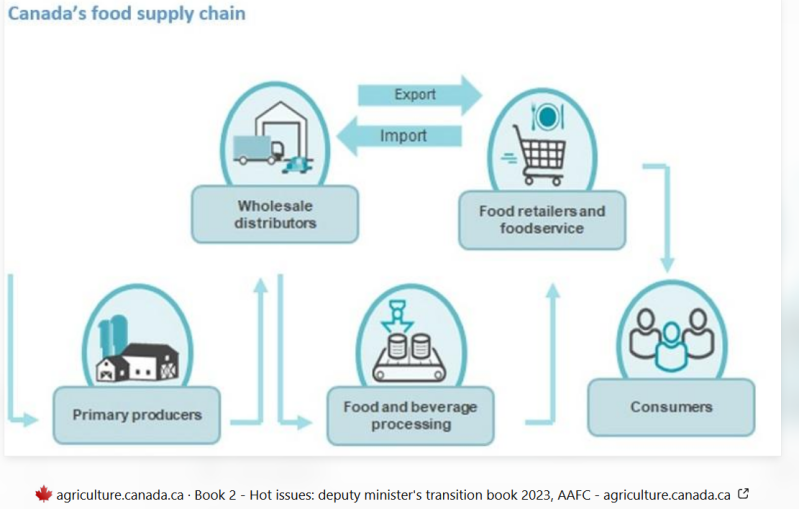
Who grows our food? Who processes it? Who manufactures it? Who supplies the ingredients, transports the products, stores them and distributes them to retailers?
Food affordability is not simply a consumer issue. It is an entire supply-chain issue.
If we want to understand why food is becoming difficult for many households to afford, we must understand both sides of the food economy: the purchasing power of consumers and the economic realities of the businesses that produce and distribute their food.
1. How Canada, the United States and the United Kingdom define poverty
Different countries use different methods to determine who is living in poverty.
Canada: The Market Basket Measure
Canada's official poverty line is based on the Market Basket Measure (MBM).
It estimates whether a family has sufficient disposable income to afford a basket of essential goods and services, including food, shelter, clothing, transportation and other necessities.
Statistics Canada's 2024 data found that approximately 9.8 million Canadians, or 24% of the population, lived in households experiencing some degree of food insecurity.
This is a significant distinction: food insecurity is not limited to households officially classified as living in poverty.
United States: Official and Supplemental Poverty Measures
The United States uses two important measures.
The Official Poverty Measure considers family income against established poverty thresholds.
The Supplemental Poverty Measure also considers taxes, government benefits, medical expenses, work-related costs and housing expenses.
The US Department of Agriculture reported that 13.7% of American households experienced food insecurity in 2024, equivalent to approximately 18.3 million households.
United Kingdom: Relative and Absolute Poverty
The United Kingdom commonly measures relative poverty using a threshold of 60% of median household income, adjusted for household composition.
It reports income before and after housing costs.
The UK government's 2024/25 Family Resources Survey found that 85% of households had high food security, 6% had marginal food security, 4% had low food security and 5% had very low food security.
Therefore, approximately 9% of UK households experienced food insecurity.
The international lesson: A household's income does not tell the entire story. Housing costs, healthcare expenses, transportation, family size and the cost of essential goods all affect how much money remains available for food.
2. The other side of food affordability: What does it cost to produce food?
While consumers face rising grocery bills, farmers and food businesses also operate within an increasingly complex economic environment.
Farmers must manage costs such as:
-
Fertilizer, seed and agricultural inputs.
-
Fuel and electricity.
-
Machinery, repairs and equipment.
-
Labour and seasonal workers.
-
Irrigation, water and land costs.
-
Storage, refrigeration and transportation.
-
Financing and insurance.
Food manufacturers and processors face a different but connected set of pressures:
-
Raw agricultural commodity prices.
-
Ingredients and packaging materials.
-
Energy and processing costs.
-
Labour and regulatory compliance.
-
Cold storage and warehousing.
-
Freight, distribution and export costs.
-
Exchange-rate movements and import expenses.
Wholesalers and distributors must also manage inventory, storage, logistics, fuel, transportation and changing demand.
These costs do not automatically translate into higher retail prices at the same rate. Each business has its own margins, contracts, efficiencies and commercial pressures.
That is precisely why better information about the food supply chain matters.
We should be asking not only why groceries cost more, but also how costs and prices change at each stage between production and the consumer.
3. Canada's food industry is a major economic force
Canada's agriculture and food-processing industries are not small sectors of the economy.
According to Agriculture and Agri-Food Canada's 2024 industry figures:
-
Food and beverage processing sales reached approximately $173.4 billion.
-
The sector employed approximately 318,400 Canadians.
-
Food processors purchased more than half of Canada's agricultural production.
-
Canadian food and beverage processing exports reached approximately $59.8 billion.
-
Processed food and beverages supplied by Canadian manufacturers account for approximately 80% of products available in Canada.
The industry includes meat processing, dairy, grain and oilseed milling, bakeries, fruit and vegetable processing, beverages, seafood, animal feed and many other businesses.
These numbers demonstrate how interconnected Canada's food economy is.
Farmers need reliable markets for their agricultural production.
Manufacturers need dependable access to ingredients and raw materials.
Wholesalers need competitive purchasing opportunities and efficient distribution.
Retailers need reliable suppliers and sustainable procurement costs.
Consumers need affordable, nutritious food.
These interests are connected. A healthy food economy needs all of them to function.
4. Why market transparency matters to everyone
One of the challenges facing the food industry is that market information can be fragmented.
A farmer may monitor commodity prices but have limited visibility into the prices being offered by different buyers.
A food processor may need to compare ingredient costs, suppliers and international market movements.
A wholesaler may be searching for new manufacturers or alternative sources of supply.
An independent grocery retailer may want to identify competitive wholesale purchasing opportunities.
A food manufacturer may be looking for new distributors, institutional buyers or export opportunities.
These are different commercial needs, but they share one requirement: access to relevant information and business connections.
Greater transparency does not mean every business must disclose confidential contracts, margins or commercially sensitive information.
It means improving access to useful market indicators, supplier information, product availability, business directories and comparable pricing information.
For example, tracking the price of wheat, canola, milk, beef, poultry, eggs, sugar and other essential commodities can help businesses understand market movements.
However, commodity prices, farm-gate prices, wholesale prices and retail prices must be tracked separately. They represent different stages of the market and should not be treated as interchangeable.
5. What can we do to improve food affordability?
A meaningful food affordability strategy should not place the entire responsibility on one group.
It requires cooperation across the food economy.
For governments:
-
Improve public access to reliable food price and market information.
-
Support agricultural productivity and food-processing investment.
-
Review transportation and infrastructure barriers.
-
Encourage competition and fair access to markets.
-
Develop targeted affordability initiatives for vulnerable households.
-
Improve data collection on food production, imports, exports and distribution.
For farmers and agricultural producers:
-
Improve access to potential buyers and commercial markets.
-
Explore new distribution and procurement relationships.
-
Monitor relevant commodity market movements.
-
Strengthen connections with processors, wholesalers and exporters.
For food manufacturers and processors:
-
Identify new ingredient suppliers.
-
Explore distribution and retail opportunities.
-
Monitor raw-material price movements.
-
Improve visibility among Canadian business buyers.
For wholesalers and distributors:
-
Develop relationships with additional manufacturers and producers.
-
Identify new product categories.
-
Compare available supply and market information.
-
Build more efficient procurement networks.
For independent grocery retailers:
-
Explore alternative suppliers and wholesale purchasing opportunities.
-
Improve access to locally produced and manufactured products.
-
Identify opportunities to offer competitive prices on essential groceries.
Food affordability should not be framed as consumers against businesses. Sustainable food production, commercially viable businesses and affordable consumer prices all matter.
6. Introducing CanFoodX: Connecting Canada's food economy
This is where CanFoodX.ca aims to make a difference.
CanFoodX is being developed as a Canadian food-market information and business network, bringing together different parts of the food supply chain.
Our objective is to create a platform where farmers, agricultural producers, food manufacturers, processors, ingredient suppliers, wholesalers, distributors and retailers can improve their visibility and access relevant industry information.
We believe that better connections and better market intelligence can create commercial opportunities throughout the Canadian food industry.
What CanFoodX aims to offer participating businesses
1. Canadian food business directory
An opportunity for farmers, manufacturers, processors, suppliers and distributors to establish a business presence and showcase their products and capabilities.
2. Supplier and buyer discovery
Help businesses identify potential suppliers, manufacturers, wholesalers, distributors and commercial partners.
3. Commodity price monitoring
Follow important food commodities and market movements, helping businesses understand changes in the cost of agricultural and food-related inputs.
4. Wholesale food market information
Build visibility into wholesale food pricing, bulk purchasing opportunities and supplier information where reliable data is available.
5. Industry news and market intelligence
Follow developments affecting Canadian agriculture, food manufacturing, international trade, supply chains and food affordability.
6. Reports and market comparisons
Develop informative reports and comparisons covering commodity movements, wholesale and retail prices, imports, exports and essential food products.
These capabilities are being developed progressively. Market data will be identified by its source, reporting period and price category so that businesses can distinguish verified information from indicative market observations.
7. An invitation to Canada's food industry
We believe Canada's food industry deserves a stronger business network.
We invite:
-
Farmers and agricultural producers.
-
Greenhouse and horticultural businesses.
-
Meat, poultry, dairy and seafood processors.
-
Grain, oilseed and pulse producers.
-
Food and beverage manufacturers.
-
Ingredient and packaging suppliers.
-
Importers and exporters.
-
Wholesale food distributors.
-
Independent grocery retailers.
-
Food-service suppliers.
to explore becoming part of the CanFoodX founding business network.
For participating businesses, this is an opportunity to establish an early presence in a developing Canadian food-market platform and help shape the information and connections the industry needs.
We want to hear directly from the people who grow, manufacture, process, supply and distribute food.
What market information would make your business more competitive? What suppliers or buyers are you trying to reach? What information is difficult to obtain?
Your input will help guide the development of CanFoodX.
Conclusion: Food affordability starts with understanding the entire food economy
Poverty statistics help governments understand economic hardship. Food insecurity statistics show how many households struggle to access sufficient food.
But solving the problem requires more than measuring household income or expanding food-bank donations.
We must also understand the economics of producing, processing, sourcing, transporting and distributing food.
Farmers need viable markets. Manufacturers need reliable inputs. Suppliers need buyers. Wholesalers need efficient distribution. Retailers need competitive purchasing opportunities. Consumers need affordable groceries.
These are not separate conversations.
They are different parts of the same food economy.
CanFoodX believes that connecting Canada's food businesses and improving access to reliable market information can contribute to a stronger, more transparent and more competitive food industry.
Join the conversation. Help build the network.
CanFoodX.ca — Connecting Canada's Food Industry.
Founding Canadian Business Membership enquiries: Visit CanFoodX.ca. or email info@canfoodx.ca